"How are you?" is the phrase every beginner wants first — and it deserves an honest answer: there is no dedicated "how are you" sign in our ASL or BSL dictionaries, so the correct way to sign it is to fingerspell H-O-W A-R-E Y-O-U with raised eyebrows. Below is exactly how to do that, plus 10 everyday phrases — each linked to a step-by-step sign guide in ASL and BSL.
How to sign "how are you" — the honest way
Don't invent a sign for this phrase. Neither our ASL nor our BSL dictionary includes a dedicated HOW-ARE-YOU sign, and guessing at one teaches you — and anyone copying you — a wrong sign. Do this instead:
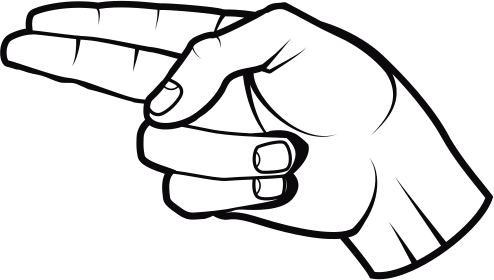
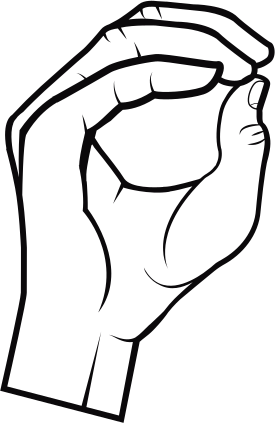
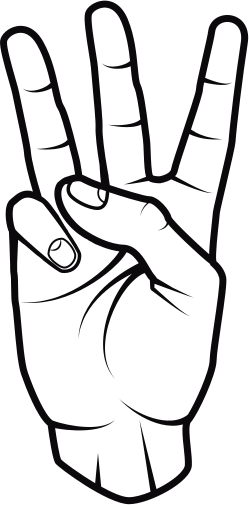
- Fingerspell the question. Spell H-O-W A-R-E Y-O-U letter by letter with your system's alphabet — one-handed for ASL, two-handed for BSL. Keep your hand near your shoulder and hold each word's final letter a beat longer.
- Raise your eyebrows. In both ASL and BSL, raised eyebrows mark a yes/no question. The eyebrows do the grammar; the fingers do the words.
- Keep eye contact. You're asking a real question to a real person — look at them while you fingerspell, not at your own hand.
10 everyday phrases with sign guides
Every phrase below has a real, verified dictionary sign. Each links to the step-by-step ASL guide and, where the BSL sign exists on this site, the BSL guide too.
- Hello (BSL) — the salute-like motion at the forehead. Your all-purpose greeting.
- Goodbye (BSL) — open hand raised, palm out, waved side to side. Use when parting.
- Good morning (BSL) — GOOD plus MORNING (fingertips in the crook of your other arm, lifted like a sunrise). For the start of the day.
- Good night (BSL) — GOOD plus NIGHT (fingertips in the crook of your other arm, moved downward like a sunset). A parting sign for the evening.
- Thank you (BSL) — flat-hand fingertips to the chin, then forward and slightly down. Use it as often as in English.
- Please (BSL) — flat dominant hand on the chest, palm down, rubbed in a small clockwise circle. Add it to requests.
- Sorry (BSL) — loose fist, palm toward your chest, rubbed in small circles over your heart. Match your face to the apology.
- Excuse me — open hand at the chest, fingers together, fingertips brushed upward against the chest twice. For getting attention politely. (ASL guide; check the BSL dictionary for its BSL equivalent.)
- Help (BSL) — dominant fist resting on your other open palm, both hands lifted upward together. The sign to learn before you need it.
- I love you (BSL) — thumb, index, and pinky raised together, other fingers curled, hand held up. For friends and family.
Common beginner mistakes
- Inventing a sign for "how are you." If it's not in the dictionary, don't make one up. Fingerspelling is the honest, correct choice.
- Forgetting the eyebrows. Fingerspelling "how are you" with a flat face reads like a statement, not a question. Raise those eyebrows.
- Mixing ASL and BSL signs. The two systems are separate languages — learn each phrase in the system you're studying and don't cross the streams.
- Fingerspelling words that have signs. Fingerspell only what you can't sign: all 10 phrases above have word-level signs, so use them.
Frequently asked questions
- How do you say 'how are you' in sign language?
- Honestly: our ASL and BSL dictionaries don't include a dedicated 'how are you' sign, so don't invent one. Signers commonly fingerspell the question — H-O-W A-R-E Y-O-U — with raised eyebrows, which mark a yes/no question in both ASL and BSL. Fingerspelling it is always correct.
- Is there a universal way to ask 'how are you' in sign language?
- No — ASL and BSL are separate languages with different alphabets and signs, so there's no single universal version. In both systems, though, the honest answer is the same: fingerspell the question with a raised-eyebrow question face rather than guessing at a sign.
- What are the most useful everyday ASL phrases for beginners?
- Start with hello, goodbye, good morning, good night, thank you, please, sorry, excuse me, help, and I love you. Each has a word-level sign in our dictionary — learn those first, and fingerspell everything else until you know the sign.
- How do you respond when someone asks how you are in ASL?
- Keep it simple: fingerspell your answer, like F-I-N-E or G-O-O-D. Fingerspelling the answer is never wrong — and if you know a dictionary sign for the word, use that instead.
- How do you say please and thank you in ASL?
- For please, place your flat dominant hand on your chest, palm down, and rub it in a small clockwise circle. For thank you, touch your chin with the fingertips of your flat hand, palm facing you, then move your hand forward and slightly down. Both have step-by-step pages in our dictionary.
- Do I need to learn ASL and BSL phrases separately?
- Yes — they're completely separate languages, not dialects of one sign language. The handshapes, signs, and even alphabets differ. Learn ASL phrases from ASL sources and BSL phrases from BSL sources, and don't mix the two systems.
Keep learning
- ASL greetings: 10+ ways to say hello, goodbye and more — the full greetings list with when-to-use guidance.
- How to introduce yourself in ASL — greeting plus your fingerspelled name, phrase by phrase.
- ASL vs BSL: key differences — why the two systems are completely separate languages.