Sign Language Alphabets
Fingerspelling references for two different languages. ASL uses a one-handed alphabet; BSL uses a two-handed alphabet where your non-dominant hand acts as the base. The handshapes are completely different — they cannot be swapped between languages.
ASL Letters A–Z
One-handed. Letters marked as motion letters are signed with movement, not a static handshape.
-
 A
AMake a fist with your thumb resting against the side of your hand.
-
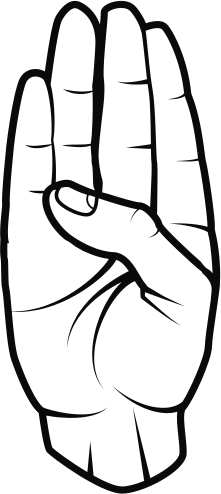 B
BHold your four fingers straight up together, thumb tucked across your palm.
-
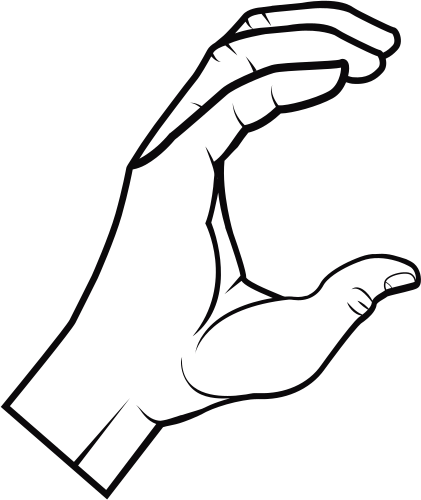 C
CCurve your fingers and thumb into the shape of the letter C.
-
 D
DPoint your index finger up; touch your thumb to the tips of your other curled fingers.
-
 E
ECurl all fingers down so the fingertips rest near the thumb — a loose claw.
-
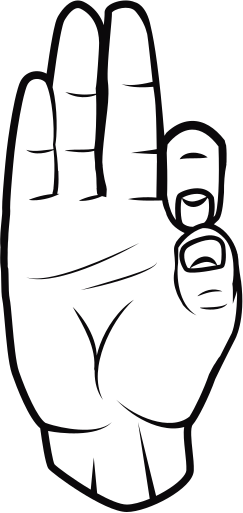 F
FTouch your index finger to your thumb forming a circle; other three fingers point up.
-
 G
GPoint your thumb and index finger sideways, parallel like a sideways pinch; other fingers curled.
-
 H
HPoint your index and middle fingers sideways together; other fingers curled.
-
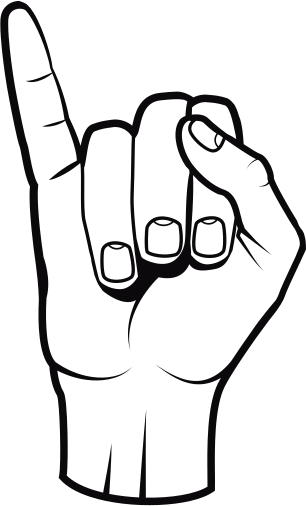 I
IMake a fist with only your pinky finger extended upward.
-
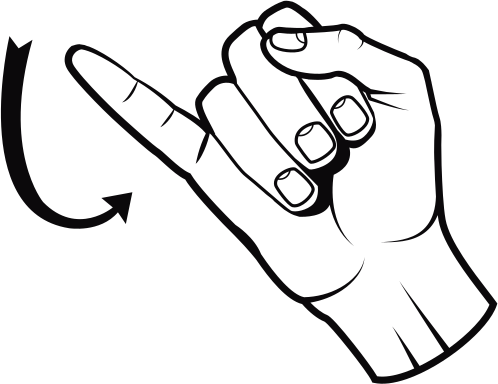 J Motion letter
Make the letter I, then trace a J in the air with your pinky.
-
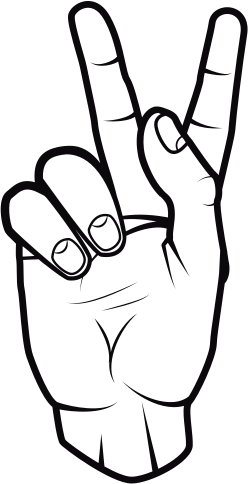 K
KHold index and middle fingers up in a V, thumb touching between them.
-
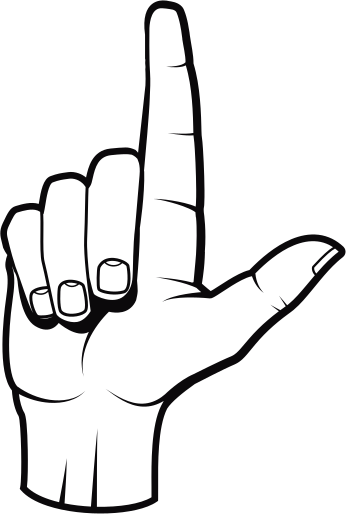 L
LExtend your thumb and index finger at right angles — an L shape.
-
 M
MMake a fist with your thumb tucked under your first three fingers.
-
 N
NMake a fist with your thumb tucked under your first two fingers.
-
 O
OCurve all fingers to meet your thumb, forming an O.
-
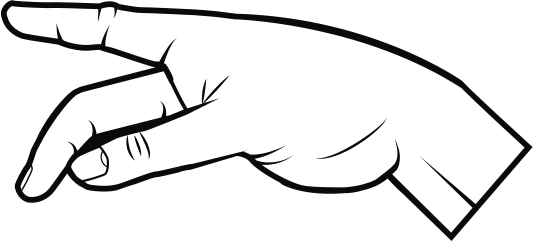 P
PLike K (index and middle up, thumb between), but pointing downward.
-
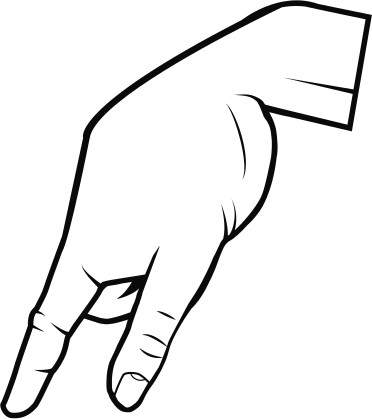 Q
QLike G (thumb and index pointing), but pointing downward.
-
 R
RCross your middle finger over your index finger; others curled.
-
 S
SMake a fist with your thumb resting across the front of your fingers.
-
 T
TMake a fist with your thumb poking up between your index and middle fingers.
-
 U
UHold your index and middle fingers up together.
-
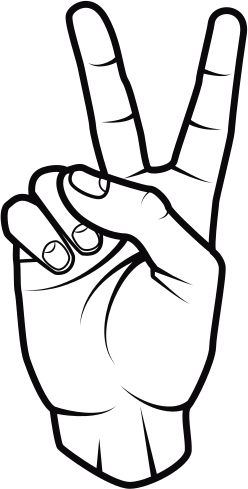 V
VHold your index and middle fingers up in a V (like a peace sign).
-
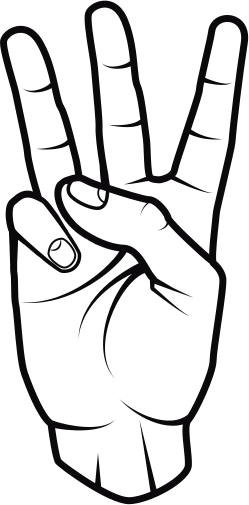 W
WHold your index, middle, and ring fingers up together.
-
 X
XMake a fist, then hook your index finger upward.
-
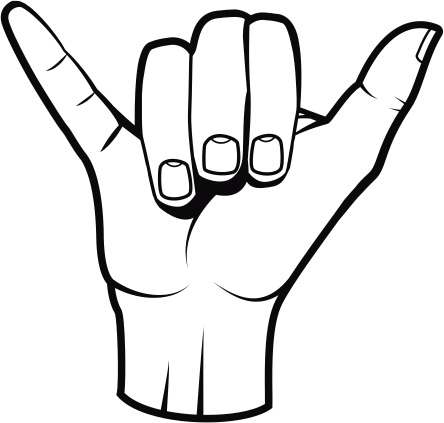 Y
YExtend your thumb and pinky; curl the rest (like 'hang loose').
-
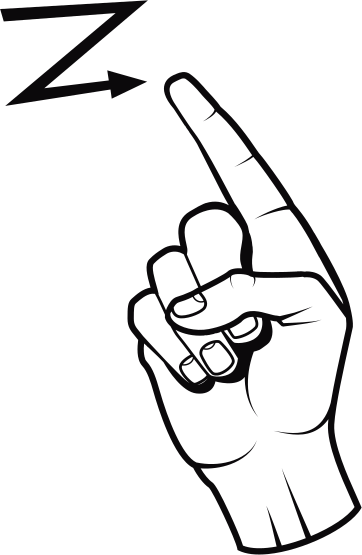 Z Motion letter
Point your index finger and trace a Z in the air.
ASL Numbers 0–10
-
 0
0 Curve your fingers to touch your thumb to your middle fingertip, forming a circle.
-
 1
1 Hold up just your index finger, palm facing you.
-
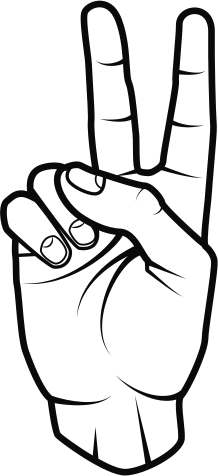 2
2 Hold up your index and middle fingers, palm facing you.
-
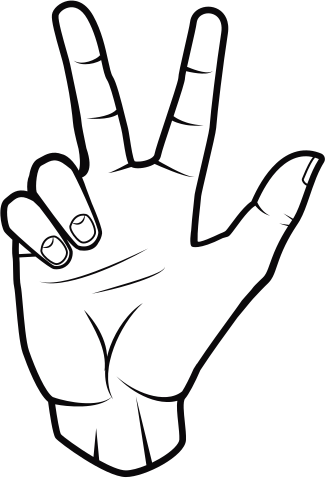 3
3 Hold up your thumb, index, and middle fingers, palm facing you.
-
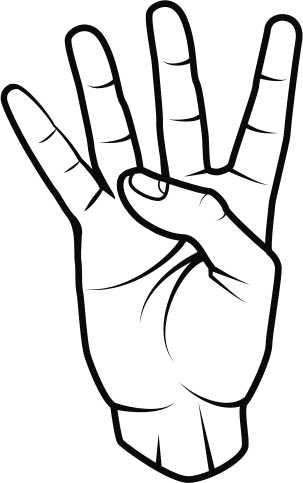 4
4 Hold up all four fingers with your thumb tucked in, palm facing you.
-
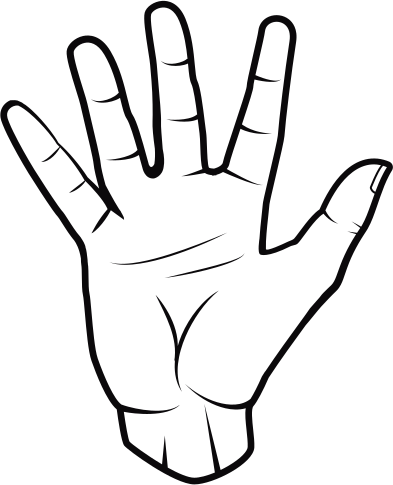 5
5 Spread all five fingers wide, palm facing you.
-
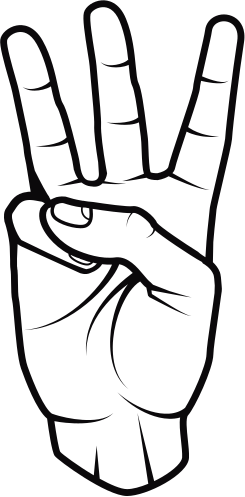 6
6 Tuck your pinky under your thumb; hold the other three fingers up, palm facing away.
-
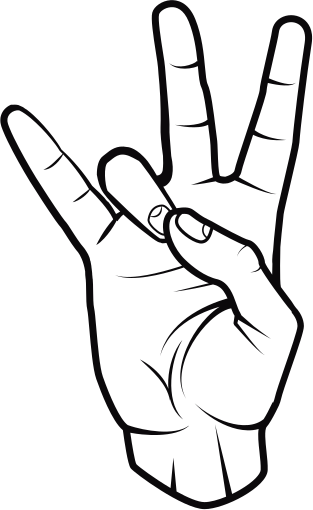 7
7 Tuck your ring finger under your thumb; other fingers up, palm facing away.
-
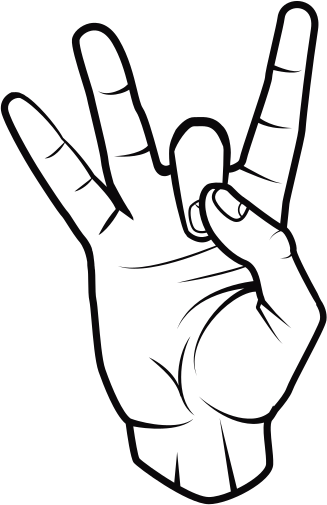 8
8 Tuck your middle finger under your thumb; other fingers up, palm facing away.
-
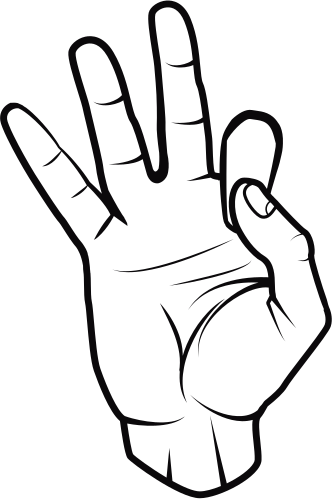 9
9 Tuck your index finger under your thumb; other fingers up, palm facing away.
-
 10
10 Make a fist with your thumb pointing up; give it a small shake.
BSL Letters A–Z
Two-handed — your non-dominant hand is the base. In the BSL alphabet the vowels live on the base hand: A thumb, E index, I middle, O ring, U little finger. H and J use a small movement; the image shows the starting position.
-
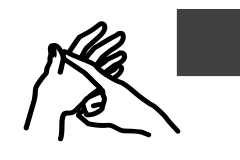 A
AHold your non-dominant hand open as a base, palm facing you. Touch the tip of your dominant index finger to the tip of the base hand's thumb. (Vowel: thumb.)
-
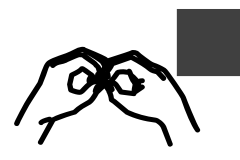 B
BBring the thumb tip and index-fingertip of both hands together so the two thumb-and-index circles interlock; keep the other fingers relaxed.
-
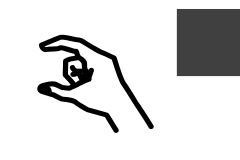 C
CWith your dominant hand alone, make an open 'C' shape, as if cupping a can. C is the only BSL fingerspelled letter formed with a single hand — the base hand is not used.
-
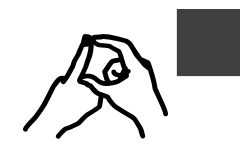 D
DTouch your dominant index fingertip to the tip of the base hand's index finger, and place your dominant thumb tip at the base of the base hand's index finger.
-
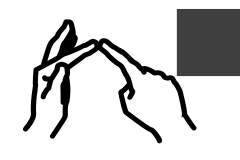 E
ETouch your dominant index fingertip to the tip of the base hand's index finger. (Vowel: index finger.)
-
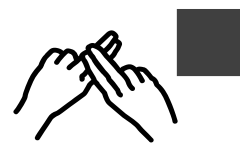 F
FLay the pads of your dominant index and middle fingers across the backs (knuckle bases) of the base hand's index and middle fingers, dominant hand on top.
-
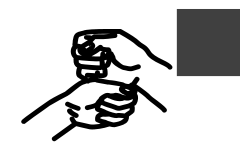 G
GClench both hands into fists and stack them on top of each other, resting on their sides, with your dominant fist on top.
-
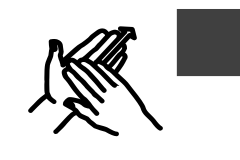 H Small movement
Lay the four fingers of your dominant hand flat on the base hand's palm, then slide them downward off the base hand's fingertips in one small movement.
-
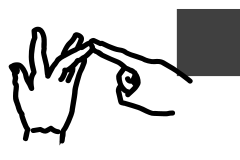 I
ITouch your dominant index fingertip to the tip of the base hand's middle finger. (Vowel: middle finger.)
-
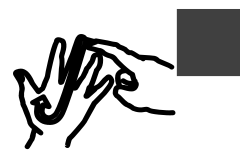 J Small movement
Start with your dominant index fingertip at the tip of the base hand's middle finger, trace down toward the wrist, then move up to the tip of the base hand's thumb.
-
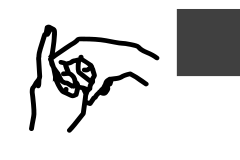 K
KBend your dominant index finger into a hook and press the back of the bent finger against the middle of the base hand's index finger.
-
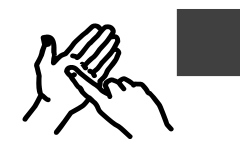 L
LLay the tip of your dominant index finger flat on the base hand's palm near its edge. The flat-laid angle is what distinguishes L from T.
-
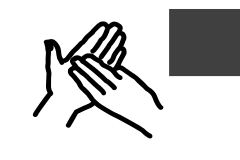 M
MHold your dominant index, middle and ring fingers together and lay them flat on the base hand's palm.
-
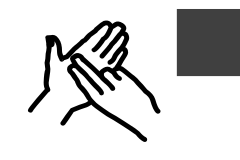 N
NHold your dominant index and middle fingers together and lay them on the base hand's palm. Keep the two fingers together or it reads as V.
-
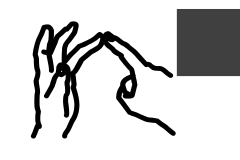 O
OTouch your dominant index fingertip to the tip of the base hand's ring finger. (Vowel: ring finger.)
-
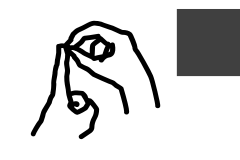 P
PPinch your dominant index finger and thumb together into a small circle and touch the circle to the tip of the base hand's index finger.
-
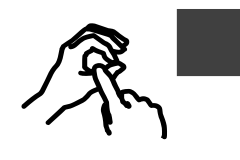 Q
QClose the base hand's index finger and thumb into a circle, and place the tip of your dominant index finger into the middle of that circle.
-
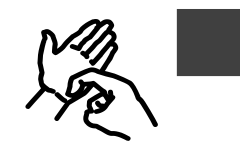 R
RBend your dominant index finger and lay it on the base hand's palm with the fingertip pointing toward the wrist.
-
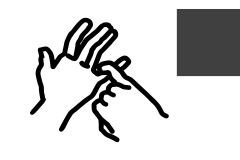 S
SBend your dominant little finger and hook it onto the base hand's little finger, interlocking the two.
-
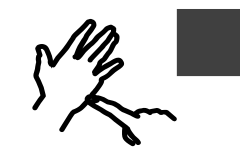 T
TPoint the tip of your dominant index finger straight down onto the base hand's palm near its edge. The downward angle is what distinguishes T from L.
-
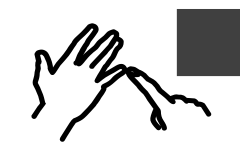 U
UTouch your dominant index fingertip to the tip of the base hand's little finger. (Vowel: little finger.)
-
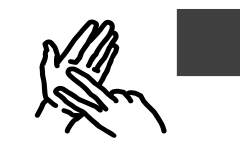 V
VSpread your dominant index and middle fingers into a V shape and lay them on the base hand's palm. The spread distinguishes V from N.
-
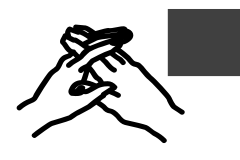 W
WThread all the fingers of your dominant hand through the gaps between the fingers of the base hand. Use all fingers — index fingers only would read as X.
-
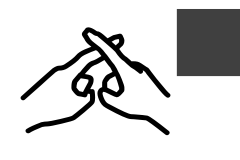 X
XLay your dominant index finger across the base hand's index finger so only the two index fingers cross. Using all the fingers would read as W.
-
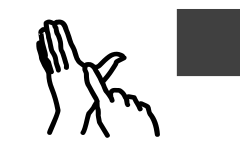 Y
YPlace the tip of your dominant index finger at the join between the base hand's thumb and the rest of the hand.
-
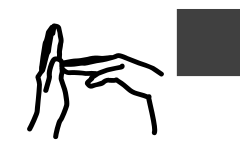 Z
ZHold the fingers of your dominant hand together and place them on the base hand so the dominant hand sticks up at a right angle to it.
BSL alphabet illustrations by Coloringbuddymike , via Wikimedia Commons, licensed CC BY-SA 3.0 .
BSL Numbers 1–5
BSL numbers have their own signs and regional variation — these are the widely taught adult one-handed forms. 0 and 6–10 vary by region and are not covered yet.
- 1
Dominant hand, index finger raised with the other fingers folded into a fist, palm facing inward.
- 2
Dominant hand, index and middle fingers raised in a V shape.
- 3
Dominant hand, index, middle and ring fingers raised.
- 4
Dominant hand, all four fingers pointed upward with the thumb held down.
- 5
Dominant hand, all five fingers extended and held up in front of the body.
Practice note
Fingerspelling is for names and terms with no established sign — most everyday signing uses word-level signs. Learn these handshapes, then explore the sign dictionary for real vocabulary in ASL and BSL.