Here are 11 ASL greetings and everyday polite signs every beginner should learn first: hello, goodbye, good morning, good night, thank you, please, sorry, excuse me, I love you, help, and what is your name. Each one links to a step-by-step dictionary guide — learn the sign, when to use it, and the mistake to avoid.


The 11 greetings
- Hello — a salute-like motion at the forehead: raise your dominant hand to your forehead, palm out, fingers together pointing up, then move it away in a small salute. Use it any time of day when meeting someone.
- Goodbye — raise your open hand, palm facing out, and wave it side to side. Use when parting at the end of a conversation.
- Good morning — a compound: GOOD (flat fingertips touch chin, then drop into your other open palm), then MORNING (fingertips in the crook of your other arm, held across your chest, lifted upward like a sunrise). Use when greeting someone at the start of the day.
- Good night — GOOD, then NIGHT: rest your dominant fingertips in the crook of your other arm and move your hand downward over the arm, like the sun setting. Use when parting in the evening.
- Thank you — touch your chin with the fingertips of your flat hand, palm facing you, then move your hand forward and slightly down. Use it as often as you would say thanks in English.
- Please — place your flat dominant hand on your chest, palm down, and rub it in a small clockwise circle. Add it to requests the way you'd say "please" in speech.
- Sorry — make a loose fist, palm facing your chest, and rub it in small circles over your heart. Match your face to the apology.
- Excuse me — hold your open hand at your chest, fingers together, and brush your fingertips upward against your chest twice. Use it to get attention politely or to pass by someone.
- I love you — raise your thumb, index finger, and pinky together, curl the other fingers, and hold the hand up. A warm greeting for friends and family — not for strangers.
- Help — make a fist with your dominant hand, rest it on your other open palm, and lift both hands upward together. The sign to know before you need it.
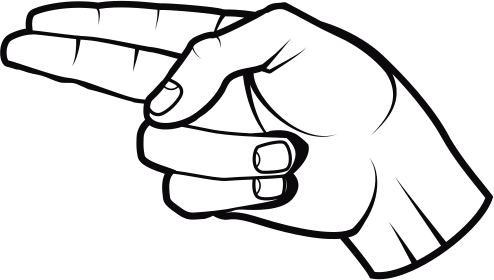
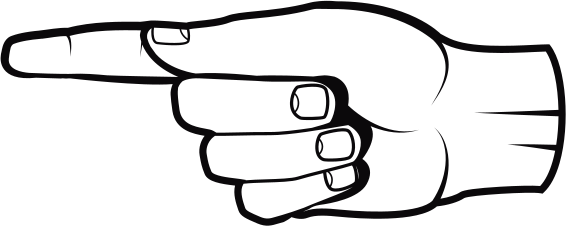
- What is your name — WHAT (a palms-up shrug), point an open palm toward the person (YOUR), then NAME (tap your index and middle fingers across the same two fingers of your other hand). The standard way to ask someone's name.
What about "how are you"?
This one deserves honesty, not a fake sign. Our dictionary does not include a dedicated HOW-ARE-YOU sign, and inventing one would teach you wrong. In real conversation, signers commonly fingerspell the question — H-O-W A-R-E Y-O-U — with raised eyebrows (in ASL, eyebrows-up marks a yes/no question), or sign the individual words and let context carry the rest. Fingerspelling it is never wrong. A dedicated guide to "how are you" plus more everyday phrases is coming later in this series.
Common beginner mistakes
- Signing hello at the wrong location. The forehead placement is what makes it hello. Drifting down to chest level turns it into an unrecognizable gesture.
- Using good night as a hello. Good night is a parting sign for the evening — signing it on arrival reads like you're leaving immediately.
- Fingerspelling greetings. H-E-L-L-O letter by letter is slow and unnatural when a word-level sign exists. Save fingerspelling for names — learn the greeting signs.
- Forgetting your face. A greeting signed with a flat expression can come across as abrupt. Match your face to your intent, and keep eye contact during introductions.
Frequently asked questions
- How do you say hello in ASL?
- Sign hello with a salute-like motion at the forehead: raise your dominant hand to your forehead, palm facing outward, fingers together pointing up, then move your hand away from your forehead in a small salute-like motion. The forehead location is what makes it hello — a plain wave at chest height won't read as the sign.
- How do you say goodbye in ASL?
- Raise your open hand, palm facing outward, and wave it side to side. Use goodbye when parting at the end of a conversation, not when you're still settling in.
- How do you say good morning in ASL?
- Good morning is a compound sign: sign GOOD (touch your chin with flat fingertips, then bring the hand down into your other open palm), then MORNING (rest your dominant fingertips in the crook of your other arm, held across your chest, and lift them upward like a sunrise).
- How do you sign 'how are you' in ASL?
- Honestly: our dictionary doesn't include a dedicated HOW-ARE-YOU sign, so don't invent one. Signers commonly fingerspell the question (H-O-W A-R-E Y-O-U) with raised eyebrows — in ASL, eyebrows-up marks a yes/no question — or sign the individual words. Our upcoming 'how are you' guide covers this in detail.
- How do you sign 'nice to meet you' in ASL?
- Our dictionary doesn't carry this phrase as a single sign yet. The safe approach is to fingerspell it letter by letter — fingerspelling is always correct when you don't have an established sign.
- What's the difference between good morning and hello?
- Use good morning when greeting someone at the start of the day, and hello at any other time. Good night works the same way as a parting sign in the evening — it means you're heading off, not that you're mid-conversation.
Keep learning
- How to fingerspell your name in ASL — the letter-by-letter skill behind every introduction.
- Essential ASL signs for beginners — the next words to learn after greetings.
- ASL signs dictionary — look up every greeting and practice from the step-by-step pages.