The short answer: ASL signs THANK YOU from the chin outward, PLEASE with a flat hand circling the chest, and SORRY with a fist circling the chest. In BSL, THANK YOU and PLEASE share one manual form — fingertips to the chin, hand moving away — and mouthing tells them apart ("please" vs "thank you"), while SORRY is a fist circling the chest with "sorry" mouthed.
ASL and BSL are separate languages, so learn the set for the one you're studying. Below are step-by-step instructions for all six signs, plus when to use each word and the mix-ups to avoid.
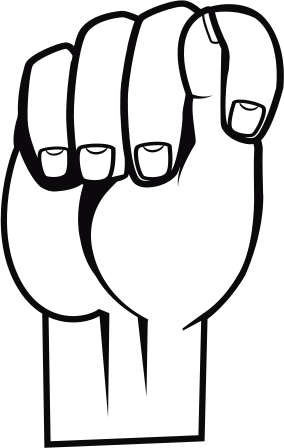
ASL T
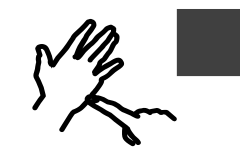
BSL T
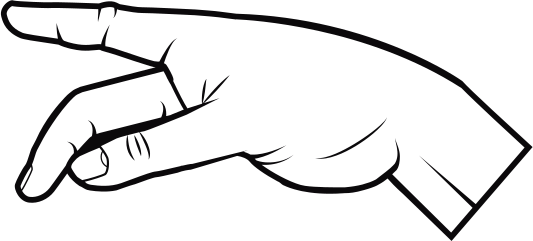
ASL P
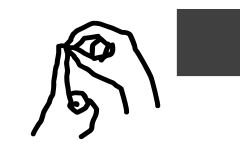
BSL P
ASL: Thank you
Touch the fingertips of your flat dominant hand to your chin, palm facing toward you. Then move the hand forward and slightly downward, ending with the palm angled upward — as if sending gratitude forward to the other person. One smooth motion; no need to repeat it. See the full reference on our THANK YOU sign page.
ASL: Please
Place your flat dominant hand on your chest, palm down, and rub it in a small clockwise circle. Picture a flat hand circling the heart. Note the contrast with SORRY below: PLEASE is a flat hand, SORRY is a fist — same location, same circular motion, different handshape. Mixing these up is the classic beginner error, so learn them as a pair. PLEASE sign page.
ASL: Sorry
Make a loose fist with your palm facing your chest, and rub it in small circles over your heart. Hold the apologetic intent — this sign reads as a genuine apology, so pair it with a sincere expression rather than a casual brush-off. For light, incidental bumps, signers often use EXCUSE ME instead. SORRY sign page.
BSL: Thank you
Touch the fingertips of your flat dominant hand to your chin, then move the hand down and away from your face in one smooth motion. Mouth the words "thank you" silently as you sign — in BSL, mouthing is part of many signs and helps make meaning unmistakable. A small, quick movement is all you need in everyday conversation. THANK YOU sign page (BSL).
BSL: Please — the same sign, mouthing decides
Here is the twist. Touch the fingertips of your flat dominant hand to your chin and move the hand slightly forward and away from your face — exactly the same manual form as THANK YOU. What distinguishes the two is the mouth: silently mouth "please" while you sign. This is not a shortcut or a mistake; in BSL the mouth pattern carries meaning and is a legitimate part of the sign. Practise both with a mirror and watch yourself switch meaning with your mouth alone. PLEASE sign page (BSL).
BSL: Sorry
Close your dominant hand into a fist, hold it against the centre of your chest, and move it in small circles against your chest. Mouth "sorry" silently while signing to make it unmistakable. SORRY sign page (BSL).
ASL vs BSL: the three signs side by side
| Sign | ASL | BSL |
|---|---|---|
| THANK YOU | Fingertips to chin, hand moves forward and down | Fingertips to chin, hand moves down and away — mouthing "thank you" |
| PLEASE | Flat hand circling the chest | Same manual form as BSL THANK YOU — mouthing "please" decides the meaning |
| SORRY | Fist circling the chest | Fist circling the chest — mouthing "sorry" |
When to use each one
- Thank you: the universal gratitude sign — for help, gifts, compliments, or when someone holds a door. Works anywhere, in both languages.
- Please: softens requests — "please help me," "please repeat that." Use it the way you would in speech: in requests, not in every sentence.
- Sorry: genuine apologies — mistakes, misunderstandings, lateness. Don't dilute it by using it for every minor bump; EXCUSE ME exists for those.
- Across languages: learn the set for the language you're studying. An ASL sign won't be recognised by a BSL signer, and the BSL mouthing system won't carry meaning for an ASL signer.
Common mistakes to avoid
- Mixing up ASL PLEASE and SORRY. Same spot, same circular motion — the only difference is flat hand (PLEASE) vs fist (SORRY). Drill them as a pair until the handshape is automatic.
- Signing BSL PLEASE/THANK YOU without mouthing. The manual form is identical, so skipping the mouth pattern removes the only thing telling them apart. Mouth the word every time.
- Using SORRY for every bump. A genuine apology sign for a light accidental bump is overkill — EXCUSE ME is the right tool for "oops, passing through."
- Smiling through SORRY. Your face should match the sign's intent. A grin undercuts the apology and can read as insincere.
- Using ASL signs with BSL signers (or vice versa). These are separate languages. A BSL signer won't recognise the ASL PLEASE, and the BSL mouthing system won't carry meaning for an ASL signer.
Frequently asked questions
- Are PLEASE and SORRY the same sign in ASL?
- No — and this is the classic beginner mix-up. ASL PLEASE uses a flat open hand circled on the chest; ASL SORRY uses a loose fist circled on the chest. Same location, same circular motion — the handshape is the whole difference. Learn them as a pair so you never confuse an apology with a request.
- How do you sign 'you're welcome' in ASL?
- 'You're welcome' is its own separate sign — not a variation of PLEASE or THANK YOU. This guide covers thanks, apologies, and requests only; look up 'you're welcome' as a standalone entry in the dictionary and learn it the same step-by-step way.
- How do you sign 'thank you very much'?
- Intensify rather than invent: sign THANK YOU with a slightly larger, more deliberate movement and a warm, sincere expression. In general, sign languages mark degree through movement size and facial intensity — you don't need a different sign for 'very much'.
- How do you respond when someone thanks you in sign language?
- Acknowledge it warmly — a nod, a smile, and the sign for 'you're welcome' in whichever language you're using. Culturally, brushing off thanks the way some spoken conversations do ('oh, it was nothing') isn't the norm; accept the thanks graciously.
- Why do PLEASE and THANK YOU look the same in BSL?
- In BSL they share one manual form — fingertips to the chin, then the hand moves away from the face. The meaning comes from mouthing: silently mouth 'please' or 'thank you' as you sign. This is normal BSL grammar, not sloppiness; the mouth pattern is part of the sign.
- Should I sign SORRY when I bump into someone?
- For a light bump, most signers use EXCUSE ME instead — it carries 'oops, my fault, passing through' better. Reserve SORRY for genuine apologies: mistakes, misunderstandings, lateness. Using the apology sign for every minor bump dilutes it.
- Can I use the ASL signs with BSL signers and vice versa?
- No. ASL and BSL are separate languages with different vocabularies — a BSL signer will not recognise the ASL signs above, and the reverse. Learn the set for the language you are studying; this guide covers both so you can compare them side by side.
Keep learning
- Common ASL greetings — hello, goodbye, and morning-to-night greetings to open conversations.
- Essential BSL signs for beginners — the core BSL vocabulary to build on after politeness.
- ASL vs BSL: key differences — why the two languages share almost no vocabulary.