Counting is one of the first practical skills in any sign language — and BSL numbers 1 to 5 are the perfect place to start, because they are the most stable, widely agreed number signs in BSL. Each is one-handed and signed with the dominant hand. Here they are, one number at a time.
1 — index finger up
With your dominant hand, raise just the index finger and fold the remaining fingers into a fist, with your palm facing inward toward you. Think of it as pointing straight up.
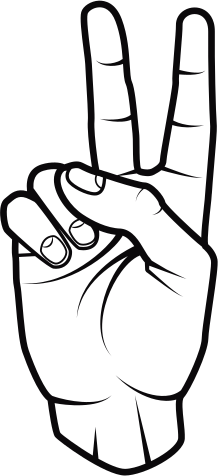
2 — two fingers in a V
Raise your index and middle fingers together in a V shape, keeping the rest folded down. If you've seen the ASL 2, note the difference in palm orientation when you compare the two systems.
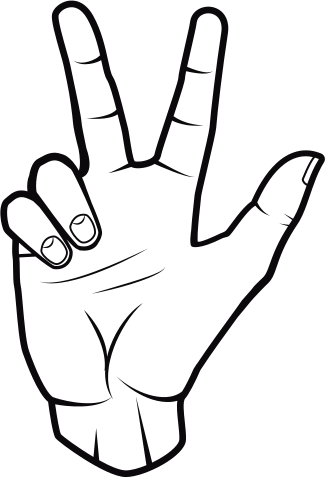
3 — three fingers up
Raise your index, middle, and ring fingers, folding the thumb and pinky down. Keep the three raised fingers straight and slightly apart so the number reads clearly at a glance.
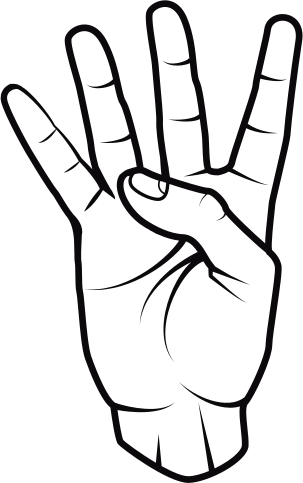
4 — four fingers, thumb tucked
Point all four fingers upward and hold the thumb down against your palm. The thumb is the distinguishing feature here — tucked in means 4, out and extended with the rest means 5.
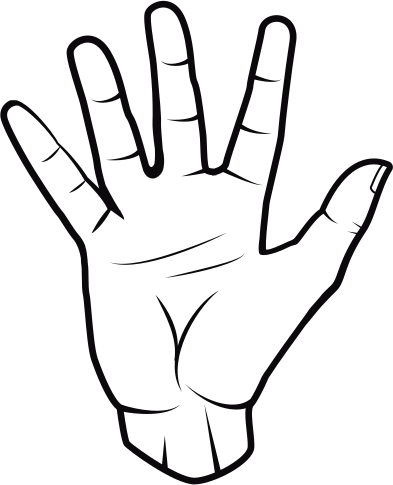
5 — the full hand
Extend all five fingers and hold them up in front of your body, spread naturally. This is the most distinctive number in the set — nothing else in BSL counting uses the full open hand this way.
How BSL numbers differ from ASL numbers
ASL numbers 1–5 are also one-handed, which is why beginners confuse the two systems. But the details differ — palm orientation, which fingers are used for which numbers, and thumb placement all vary. Our alphabet page shows the ASL and BSL systems side by side, so you can compare directly instead of mixing them up.

An honest note on 0 and 6–10
This guide deliberately stops at 5. BSL number signs for 0 and 6–10 vary by region across the UK, and describing one regional version as "the" BSL sign would be misleading. This site covers the stable, widely agreed forms — numbers 1 to 5 — and doesn't guess at the rest. When you're ready for higher numbers, learn them from a Deaf instructor or a regional BSL resource.
Counting practice tips
- Count real things — items on your desk, stairs as you climb, minutes on a timer — rather than drilling 1–5 in sequence alone.
- Keep your hand up in front of your body where a conversation partner could see it; dropping it to waist level is hard to read.
- Practise the thumb transition between 4 (thumb tucked) and 5 (thumb out) until it's clean — that's the trickiest boundary in the set.
- Say the number aloud as you sign it at first; drop the voice once the handshapes are automatic.
Frequently asked questions
- Are BSL numbers one-handed or two-handed?
- One-handed. Like most BSL counting, numbers 1 to 5 are signed with the dominant hand alone. The two-handed alphabet is used for letters, not for these number signs.
- Do BSL numbers look like ASL numbers?
- Not quite. ASL numbers are also one-handed, but the handshapes and palm orientations differ — for example, BSL 1 points the index finger up with the palm facing inward, while ASL 1 holds the index finger with the palm facing the signer. Check the alphabet page, which shows both systems side by side.
- Why doesn't this guide cover 0 and 6–10?
- Because they vary by region. BSL number signs above 5 (and zero) differ between parts of the UK, so describing one version as 'the' BSL sign would be misleading. This site covers the stable, widely agreed forms: 1 to 5.
- Which hand do I count with?
- Your dominant hand — the hand you write with. Keep it up in front of your body where the other person can see it clearly.
- How do I practise BSL numbers without looking like I'm guessing?
- Count real things: items on your desk, stairs as you climb them, minutes on a timer. Counting in context cements the handshapes far faster than drilling the numbers in sequence alone.
- Can I learn BSL numbers from ASL resources?
- No — don't cross the streams. The systems look similar at a glance but differ in real details like palm orientation and finger selection. Learn BSL numbers from BSL sources and ASL numbers from ASL sources.
- How do you count to 10 in BSL?
- This site covers the stable, widely agreed signs: 1 to 5. The signs for 0 and 6–10 vary by region across the UK, so we don't describe a single version as 'the' BSL sign. Learn higher numbers from a Deaf instructor or a regional BSL resource.
- How do you sign your age in BSL?
- Honestly: signing an age needs the number signs for the specific number, and since this site covers BSL 1–5 only, ages above 5 aren't covered here. Learn the full 1–31 range from a Deaf instructor or a regional BSL resource before signing ages.
- How do you sign phone numbers in BSL?
- Phone numbers need digit signs beyond 5, which vary by region — and phone-digit conventions aren't something to guess at from text descriptions. This site doesn't cover them; a Deaf instructor or regional BSL course is the honest route.
Keep learning
- ASL vs BSL: key differences — why the two systems are completely separate languages.
- How to fingerspell your name in BSL — the two-handed BSL alphabet, numbers' close companion.
- ASL & BSL alphabet reference — compare both systems side by side.