ASL numbers 0–10 are all signed one-handed with your dominant hand, and they follow one pattern worth learning upfront: 1–5 are signed with your palm facing you, 6–9 with your palm facing away. 0 is a circle made with your thumb and middle finger, and 10 is a fist with the thumb up and a small shake. Learn that pattern and the individual handshapes below, and you can count on your fingers in ASL.
ASL numbers 0–9: the handshape chart
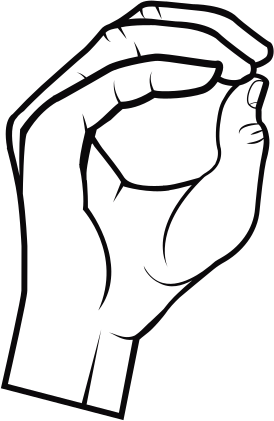

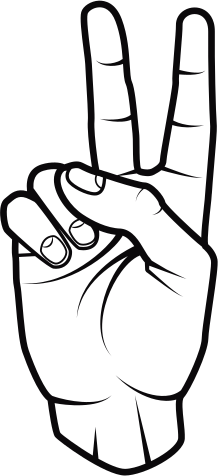
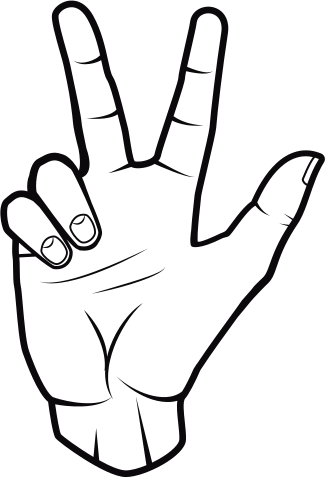
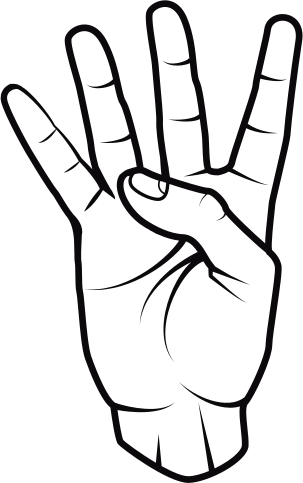
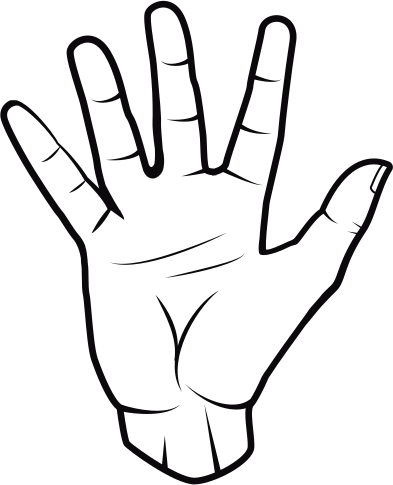
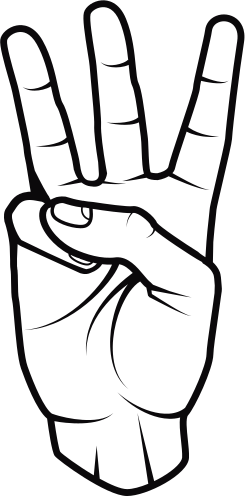
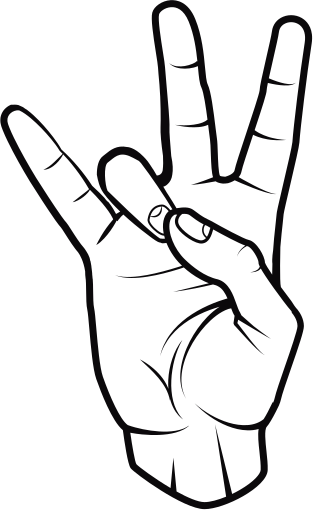
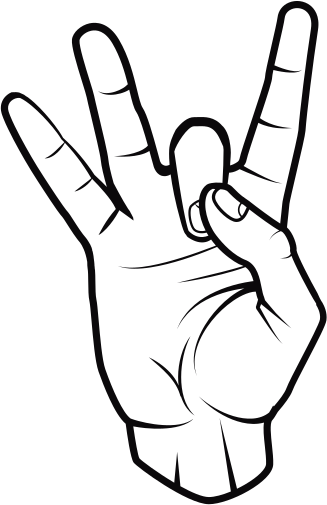
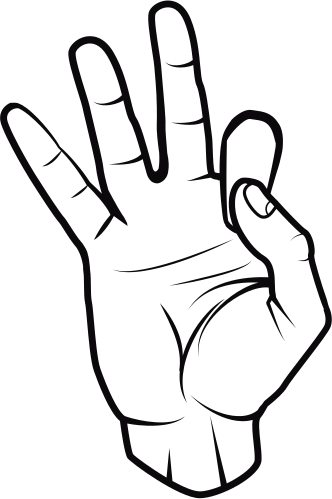
Each number, described
- 0: touch your thumb to your middle fingertip, curving the fingers into a circle.
- 1: raise just your index finger, palm facing you.
- 2: raise your index and middle fingers together, palm facing you.
- 3: raise your thumb, index, and middle fingers, palm facing you.
- 4: raise all four fingers with your thumb tucked in, palm facing you.
- 5: spread all five fingers wide, palm facing you.
- 6: tuck your pinky under your thumb and hold the other three fingers up, palm facing away from you.
- 7: tuck your ring finger under your thumb, other fingers up, palm facing away.
- 8: tuck your middle finger under your thumb, other fingers up, palm facing away.
- 9: tuck your index finger under your thumb, other fingers up, palm facing away.
- 10: make a fist with your thumb pointing up, then give it a small shake — the shake is part of the sign.
ASL vs BSL numbers
ASL and BSL don't share number handshapes — just as their alphabets are completely different, their number systems are too. ASL numbers 0–10 are one-handed, as shown above. BSL uses its own set of number signs, which we cover in our guide to BSL numbers 1 to 5 — including how they differ from the ASL forms on this page. Learn the system used by the Deaf community you'll actually be signing with.
Practice tips
- Count 0–10 in order until the handshapes feel automatic, then drill in random order — real conversation never goes in sequence.
- Count real things during your day: stairs, items on a shelf, minutes on a clock.
- Watch the palm orientation: 1–5 face you, 6–9 face away. Getting this wrong is the most common beginner mistake.
- Practise in a mirror and check each handshape against the chart above.
Frequently asked questions
- How do you count to 10 in ASL?
- ASL numbers are one-handed. For 1–5, hold your palm facing you and raise the matching fingers (1 = index finger, 5 = all five spread wide). For 6–9, turn your palm away and tuck one finger under your thumb. 0 is a circle made by touching your thumb to your middle fingertip, and 10 is a fist with the thumb pointing up, given a small shake.
- Are ASL numbers signed with one hand?
- Yes — ASL numbers 0–10 are all one-handed, signed with your dominant hand. This is one of the clear differences from BSL, which handles numbers differently.
- How do you sign 0 in ASL?
- Curve your fingers and touch your thumb to your middle fingertip, forming a circle. It's a distinct handshape — not just a closed fist.
- How do you sign 10 in ASL?
- Make a fist with your thumb pointing straight up, then give it a small shake. The shake is part of the sign — a still fist doesn't read as 10.
- Why do 1–5 and 6–9 face different directions?
- In ASL, 1–5 are signed with the palm facing you and 6–9 with the palm facing away. This palm flip is part of the standard forms — signing 6–9 with the palm toward you is a common beginner mistake that makes the numbers hard to read.
- How are ASL numbers different from BSL numbers?
- ASL and BSL use different handshapes for numbers, just as they use different alphabets. Our guide to BSL numbers 1 to 5 walks through the BSL system and how it compares.
- What's the best way to practise ASL numbers?
- Count real things through your day — stairs, items on a shelf, the time on a clock. Drill 0–10 in order until smooth, then practise in random order so you're producing each number on demand, not just reciting a sequence.
- How do you sign your age in ASL?
- Sign the number for your age the same way you'd sign any number. The handshapes on this page are exactly what you need — a Deaf instructor can show you the natural phrasing that goes around the number in conversation.
Keep learning
- BSL numbers 1 to 5 — the BSL number system and how it differs from ASL.
- ASL & BSL alphabet reference — every letter handshape for fingerspelling practice.
- ASL & BSL signs dictionaries — move from numbers to word-level signs.